Good Practices for Climate-Resilient Agribusiness

Tried-and-tested approaches from Cocoa, Livestock and Maize value chains across Africa, ready to learn from, adapt and scale.
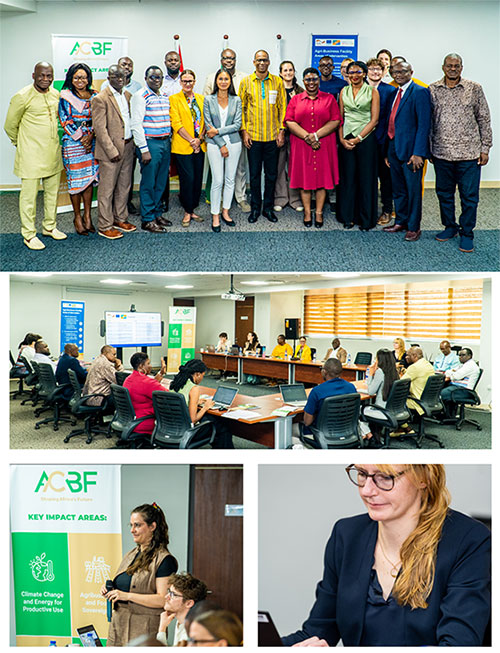
A blueprint for innovation and climate resilience
Climate change is increasing the risks of droughts, floods, heat stress, pests, diseases and market volatility across the Cocoa, Livestock and Maize value chains, with rural populations and women bearing the greatest impact. This portal brings together Good Practices that help producers and agribusinesses anticipate, absorb and adapt to these risks, drawn from projects supported by the Agri-Business Facility for Africa (ABF) and validated through an independent expert selection process.
Through its Matching Grant Fund, ABF has supported over 65 climate-resilient value chain projects, generating a rich body of innovations: climate-resilient crop varieties and improved livestock breeds, agroforestry and regenerative agriculture, renewable energy solutions, digital tools such as traceability platforms and AI-assisted advisory services, and market-linkage models like contract farming and cooperative business structures.
Every Good Practice featured in this thematic collection is catalogued as a Knowledge Asset within the ACBF Knowledge Repository and has been independently scored and validated by a panel of technical experts. The portal does not maintain a separate repository. It provides a thematic view of a single authoritative record, so each practice is also discoverable through repository search, thematic collections and Communities of Practice across the wider Hub.
Where Good Practices apply
Good Practices operate at three levels, from the individual farm or firm, through the support services around it, up to the policies and institutions that shape the whole sector.
Farm and firm level
Agronomic and business-model practices used directly by producers and firms. Example: soil fertility management using organic matter, biochar and mulching.
Producers & agribusinesses
Support services
Support functions such as training, advisory, technical and financial services. Example: cost-efficient extension training formats for agroforestry.
Extension & service providers
Policies and institutions
Policy design and institutional frameworks that enable resilience. Example: incentives for sustainable, deforestation-free cocoa production.
Policymakers & institutions
Three value chains, one collection
Explore validated Good Practice Knowledge Assets by the value chain they serve. Each tile opens the Good Practices Collection in the Knowledge Repository, pre-filtered by value chain.
Cocoa
Agroforestry, traceability, deforestation-free production and farmer business models across West and Central Africa's cocoa belt.
Livestock
Improved breeds, fodder and water management, and resilient husbandry across Cattle, Goat, Sheep and Dairy systems.
Maize
Climate-resilient varieties, regenerative agriculture, post-harvest handling and market-linkage models for maize systems.
Gender and climate vulnerability
Rural producers, and women in particular, bear the brunt of climate disruption across Africa's agricultural value chains. Good Practices in this collection are documented with attention to who adopts them, who benefits, and what it takes for women-led enterprises to scale them.
Access Good Practices content
All validated Good Practices are catalogued as Knowledge Assets in the ACBF Knowledge Repository and available through the Good Practices collection.
Good Practices Collection
Browse, search and filter validated Good Practice Knowledge Assets in the ACBF Knowledge Repository, sorted by most recent publication.