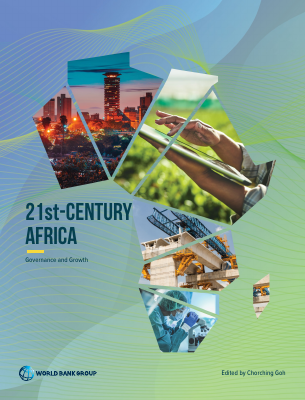
21st-Century Africa: Governance and Growth.
Annual Report
Ouvert
- Détails du fichier
- Size: 25MB
- Créateur / Auteur : Joan Addedis
- Type de ressource : Africa Capacity Report
- # Télécharger: 254
- Accéder: Open to Download
January, 2025
Télécharger des fichiers
9781464821868.pdf
Informations de base
Créateur / Auteur
World Bank
Source / Éditeur
World Bank
Type de ressource
Nombre de pages
437
Détails géographiques et d'audience
Classification et domaines
Objet
ChatGPT said: 21st Century Africa, African countries' progress, World Bank report (2000), Africas challenges, Economic competitiveness, External financing, Inclusive green growth, Labor-intensive industrialization, Automation and trade patterns, Climate change, Population growth, Sustainability threats, Pollution and resource overextraction, Governance and leadership, Public engagement, Competent state, Skills and technology, Health care access, Labor force participation, Market systems and economic opportunities, Youth empowerment, Policy strategies, Inclusive growth.
Résumé
Will the 21st century witness a major push by African countries to catch up with their peers? Or will the continent, overall, continue to lag other regions? A flagship report published by the World Bank in 2000, Can Africa Claim the 21st Century?, provided a blueprint for Africa to claim the new century. Twenty-five years later, Africas aggregate progress reveals some advancements. Yet some of the endeavors identified as pivotal to accelerate progress at the centurys outset have fallen short. Much more needs to be done to mitigate conflicts, invest in people, bolster economic competitiveness, and reduce dependence on external financing. What will it take to reshape Africas trajectory, not only for the few countries that have made notable advancements but also for current and future generations across the continent? The goal of fostering inclusive green growth remains pertinent today, yet its attainment is increasingly daunting. The growth modelbased on labor-intensive, polluting industrialization that once brought wealth elsewherefaces headwinds as automation expands, trade patterns shift, and climate pressures mount. Amid rapid population growth, achieving social and economic inclusion becomes more demanding. Moreover, sustainability is threatened by pollution, resource overextraction, and the exacerbating impacts of climate change. Nevertheless, promising instances and hopeful examples in numerous African countries demonstrate that no inherent barriers prevent Africa from accelerating development and narrowing the gaps with other world regions. To achieve this goal, countries must intensify efforts to address three crucial enablers of development: 1. Governance with accountable leadership, widespread public engagement, and a competent and committed state. Without such elements, progress on any aspect of development is unattainable. 2. Africans equipped with skills, technology, and access to quality health care, enabling them to engage in society and the economy, particularly given the influx of individuals joining the workforce. 3. Robust, well-functioning market systems that cultivate growth, foster opportunities, and generate productive employment. This sequel report analyzes past achievements, enduring obstacles, and potential policy alternatives. The chapters in this report outline strategies for governments to enhance support for inclusive green growth. They delve into ways the continent can empower its expansive, young labor force with the requisite skills and resources for a modern,
Mots-clés
21st Century Africa, African countries' progress, World Bank report (2000), Africas challenges, Economic competitiveness, External financing, Inclusive green growth, Labor-intensive industrialization, Automation and trade patterns, Climate change, Population growth, Sustainability threats, Pollution and resource overextraction, Governance and leadership, Public engagement, Competent state, Skills and technology, Health care access, Labor force participation, Market systems and economic opportunities, Youth empowerment, Policy strategies, Inclusive growth.
Connexion requise
Veuillez vous connecter ou créer un compte pour consulter et publier des commentaires.
Se connecter S'inscrire